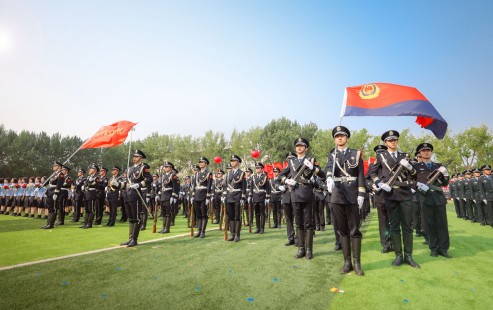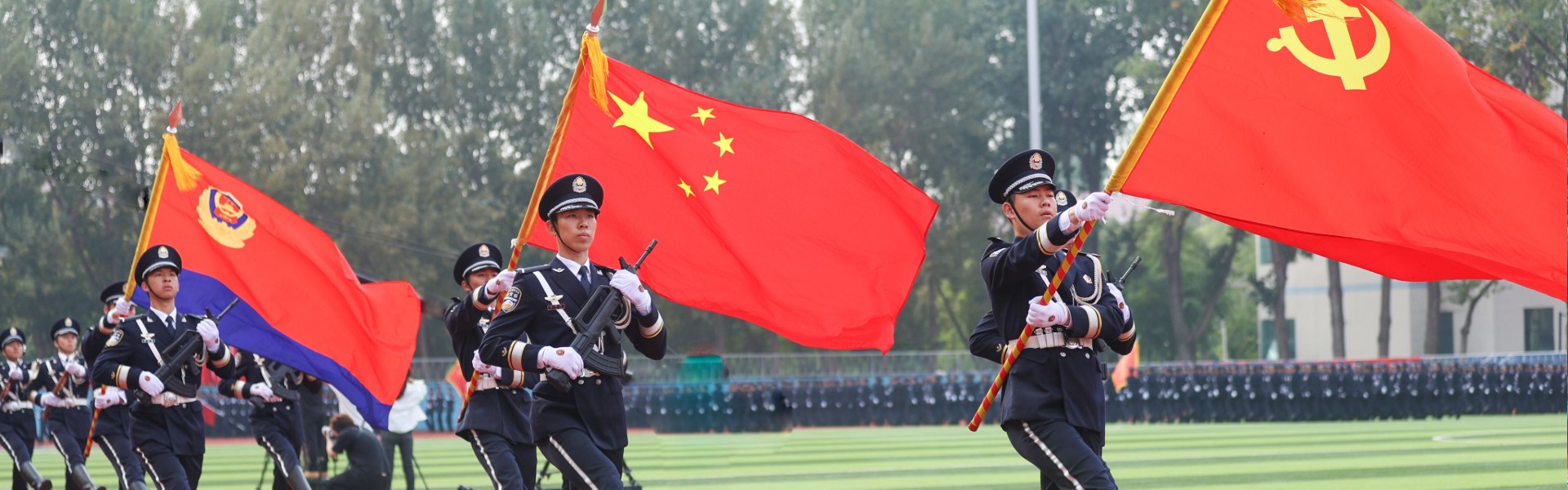
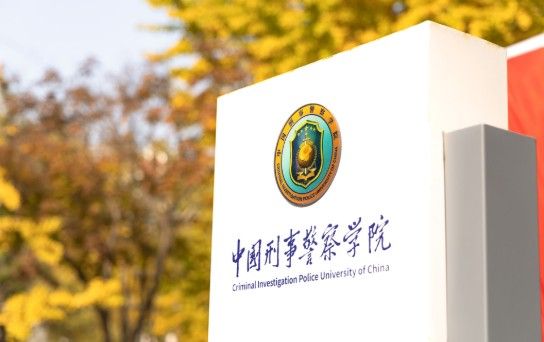
Criminal Investigation Police University of China (CIPUC) is a public undergraduate institution directly under the Ministry of Public Security of People's Republic of China. Founded in May 1948, it was approved by the State Council to be expanded into a full university in 1981, becoming China's first public security institution to offer undergraduate education in public security disciplines. In 1998, it was authorized by the State Council to confer master's degrees. Located in Shenyang, Liaoning Province, the university has three campuses (Tawan, Baishan Road and Puhe) covering a total area of 516,667 square meters (775 mu).
In its construction and development, CIPUC has received great attention and care from the CPC and state leaders. Leaders of the university were once warmly received by Chairman Mao Zedong. The university's name was inscribed by Chairman Peng Zhen. In 2007 and 2008 respectively, Comrade Meng Jianzhu—then Member of the Political Bureau of the CPC Central Committee, Secretary of the Political and Legal Affairs Commission of the CPC Central Committee, and State Councilor, Secretary of the Party Committee and Minister of the Ministry of Public Security—paid two inspection visits to the university. In 2018, Comrade Guo Shengkun—then Member of the Political Bureau of the CPC Central Committee and Secretary of the Political and Legal Affairs Commission of the CPC Central Committee—inspected the university. In 2019, Comrade Zhao Kezhi—then State Councilor, Secretary of the Party Committee and Minister of the Ministry of Public Security—inspected the university. In November 2024, Comrade Wang Xiaohong—Member of the Secretariat of the CPC Central Committee, State Councilor, Secretary of the Party Committee and Minister of the Ministry of Public Security—inspected the university. Mr. Wang fully affirmed the university's achievements in its school-running and encouraged the university to carry forward the red revolutionary traditions. He expressed the expectations that the university would continuously cultivate professional, practical and intelligent talents in criminal investigation and technology, and make new and greater contributions to the development of public security undertakings and the building of public security teams.
The university consistently adheres to the socialist orientation in running schools and upholds the principle of building the university through political integrity and managing it with strict discipline. It firmly maintains the fundamental political principle that public security work and public security universities are loyal to the Party. It takes forging a loyal police spirit as the top priority in running the university, regards distinctive development as an effective path to elevate its school-running, treats reform and innovation as the eternal theme for improving the quality of its school-running, and considers the police college spirit as an inexhaustible driving force for accumulating momentum for development.
Over its 77-year history, the university has fostered the fine school spirit of "Loyalty, Truth-Seeking, Solidarity and Endeavor", and pioneered the police-style management model for public security universities. It has successively fostered and delivered more than 200,000 leaders, professional backbones and specialized technical talents to the political, legal and public security agencies across the country. A large number of heroes and models have emerged among our graduates: more than 1,000 individuals have been commended for meritorious service at or above the Second Class level, and hundreds have been awarded titles such as National Public Security First-Class and Second-Class Model Police Officers, National Excellent People's Police and National Model Workers. The university has made important contributions to the development of public security undertakings and the building of a "Safe China". It is hailed as "the top university for criminal police in China".
With moral education and talent cultivation as its fundamental tasks, CIPUC is fully committed to nurturing talents for the police force, the Party and the country. Over the years, it has gradually established a disciplinary system that suits China's national conditions, matches public security work and features distinct public security characteristics. It has formed a school-running model that integrates teaching, scientific research and case handling, and built a comprehensive talent training system at multiple levels. Currently, CIPUC has a total enrollment of 6,971 undergraduate students and 1,588 post-graduate students. There are 7 teaching-oriented secondary colleges and 4 teaching departments. The university offers 5 first-level disciplines, namely Law, Police Science, Forensic Science and Technology, Forensic Medicine, and National Security Studies, as well as 4 professional degree-awarding programs including Juris Master (JM), Master of Police Studies (MPS), Master of Applied Psychology (MAP) and Master of Public Administration (MPA). Its first-level disciplines of Police Science as well as Forensic Science and Technology have been selected into the list of "Liaoning Provincial First-Class Discipline Construction Programs". The university runs 13 public security-related undergraduate programs covering major fields of public security work, including Criminal Investigation, Public Order Administration, Economic Crime Investigation, Narcotics Control, Police Intelligence, International Police Affairs, Police Dog Technology, Technical Investigation, Anti-Terrorism Police Affairs, Forensic Science and Technology, Police Audio-Visual Technology, Cyber Security and Law Enforcement, and Data Police Technology. Among these programs, 10 are selected as national-level first-class undergraduate program construction sites and 1 as provincial-level first-class undergraduate program construction site.

CIPUC adheres to the strategy of strengthening itself through talents, and has built a high-quality, professional teaching faculty characterized by noble morality, superb professional competence, rational structure and great vitality. Currently, the university has a total of 858 faculty and staff members, among whom there are 480 full-time teachers (including 82 professors, 132 associate professors and 265 teachers with doctoral degrees). The faculty includes 3 experts enjoying Special Government Allowances of the State Council, 5 experts enjoying Special Allowances of the Ministry of Public Security, 1 member selected into the Program for New Century Excellent Talents in University sponsored by the Ministry of Education, 12 Outstanding Teachers (Instructors) in the National Public Security Education System, 4 Teachers with Outstanding Achievements in National Public Security Education, 15 Distinguished Experts in Criminal Science and Technology of Public Security Organs Nationwide, 30 members of the National Young Talent Pool in Criminal Science and Technology, 3 Outstanding Communist Party Members of the Party Committee of the Departments Directly Affiliated to the Ministry of Public Security, 2 Outstanding Party Workers of the Party Committee of the Departments Directly Affiliated to the Ministry of Public Security, 20 Provincial and Ministerial-level Renowned Teachers, 2 Young Top Talents selected into the Xingliao Talent Program of Liaoning Province, 1 Renowned Teacher selected into the Xingliao Talent Program of Liaoning Province, 3 Outstanding Experts of Liaoning Province, 8 Outstanding Teachers of Liaoning Province, 6 Outstanding Young Backbone Teachers of Liaoning Province, 5 members selected into the Excellent Talent Support Program for Colleges and Universities in Liaoning Province, 1 Outstanding Scientific and Technological Worker of Liaoning Province, 6 Outstanding Communist Party Members of Colleges and Universities in Liaoning Province, 3 Outstanding Party Workers of Colleges and Universities in Liaoning Province, 5 Party Member honored with the title of "Campus Vanguard Model Post" in Colleges and Universities in Liaoning Province, and 9 members selected into the "Hundred, Thousand and Ten Thousand Talents Project" of Liaoning Province (3 at the "Hundred" level and 6 at the "Thousand" level). In addition, CIPUC boasts 2 national-level Curriculum-based Ideological and Political Education Teaching Teams, 8 provincial and ministerial-level Curriculum-based Ideological and Political Education Teaching Teams, 4 Excellent Teaching Teams of Liaoning Province, and 1 Innovative Team of Higher Education in Liaoning Province.
Upholding the principles of matching, serving and leading practical policing work, CIPUC has conducted in-depth cooperation with public security operational departments, research institutes and relevant enterprises. It extensively carries out collaborative education and practical education, and has built a well-structured practical-oriented talent training system with distinct hierarchical levels. The university has established comprehensive cooperation with operational bureaus of the Ministry of Public Security including the Criminal Investigation Bureau, Economic Crime Investigation Bureau, Technical Investigation Bureau and Narcotics Control Bureau. It has also launched full-scale cooperation with provincial-level public security departments such as the Public Security Department of Liaoning Province, Hubei Province, Guangdong Province and the Guangxi Zhuang Autonomous Region. Additionally, it has carried out "city-level integrated" cooperation with the Shenyang Public Security Bureau, Shenyang Railway Public Security Bureau and Shenyang Customs Anti-Smuggling Bureau. These efforts have created a brand-new platform for win-win cooperation between public security colleges and local public security organs, achieving seamless connection and synchronous development between teaching, scientific research, case handling and practical policing work. Furthermore, the university has established partnerships with the Institute of Forensic Science of China, the First Research Institute and the Third Research Institute under the Ministry of Public Security, as well as relevant high-tech enterprises. It also regularly invites experts and scholars to campus for exchange activities. Events such as "Directors of Public Security Departments Visit CIPUC", "Criminal Police from 100 Cities Visit CIPUC" and "Living Library" are playing an increasingly prominent role in talent cultivation, driving the reform of practical-oriented teaching to a higher level of development.
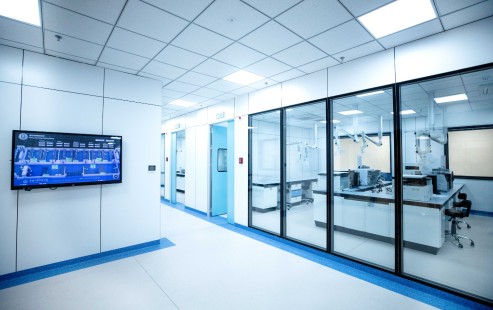
Upholding the principles of innovation driving development and leading practical policing work, CIPUC has carried out extensive research centering on the construction of a "Safe China" and a "Law-based China", as well as the hot-spots and difficult issues in public security work, which has led to fruitful results. Currently, the university boasts 1 National Engineering Laboratory (co-constructed), 2 Key Laboratories of the Ministry of Public Security, 3 Key Laboratories of Liaoning Province, and 1 Demonstration Training Base for Colleges and Universities of Liaoning Province. Approved by the Ministry of Education, the university has established the Global Criminal Crime Research Center of CIPUC, which provides policy advice and intellectual support for safeguarding the security of the Belt and Road Initiative and enhancing China's soft power. The Liaoning Collaborative Innovation Center for Cyber Security and Law Enforcement, initiated and established by the university, is the first provincial and ministerial-level collaborative innovation center among public security colleges and universities. The Research Center for Crime Governance in the New Era has been accredited as a "New-type Think Tank of Colleges and Universities in Liaoning Province" by the Department of Education of Liaoning Province. In collaboration with the Criminal Investigation Bureau of the Ministry of Public Security, the university has set up the National Research Center for Emerging Crimes and obtained the accreditation as its branch center—the only think tank in Northeast China dedicated to supporting the national efforts in combating and governing emerging crimes.
The university's faculty members and research teams have won 2 national-level scientific and technological awards and 79 provincial and ministerial-level scientific research awards. It has undertaken and completed 3 projects under the National Key R&D Program of the 13th Five-Year Plan, and is currently undertaking 1 project under the National Key R&D Program of the 14th Five-Year Plan, along with 94 national-level scientific research projects and 1,070 provincial and ministerial-level scientific research projects. At the moment, the university publishes two academic journals: Journal of Criminal Investigation Police University of China and China Criminal Police. The former is the first academic journal launched by a public security university in China.
CIPUC strives to build a distinctive brand for on-the-job police training. It serves as the Technical Investigation Training Base and Narcotics Police Training Base of the Ministry of Public Security, as well as the "Training Base for Criminal Investigation Backbone Personnel of Security Departments of the Whole Army" designated by the Political Work Department of the Central Military Commission. The university undertakes various training tasks assigned by the Ministry of Public Security, including training courses for backbone personnel in criminal investigation and criminal science and technology, training courses for police officers promoted from Senior Police Supervisor (Level 1) to Senior Police Commissioner (Level 3), and national training courses for professional teachers. It also hosts a wide range of on-the-job training courses commissioned by military security departments, public security organs, supervisory commissions, people's procuratorates, and people's courts from cities and provinces nationwide. In addition, the university offers correspondence undergraduate education in Criminal Investigation and Police Dog Technology. It trains over 5,000 on-the-job police officers annually, with a current enrollment of more than 1,500 correspondence students.
Upholding the principles of open education and expanded cooperation, CIPUC continuously accelerates the process of internationalization in its school-running endeavors, serving as a window for international exchanges in policing work. In 2017, the university was officially accredited to conduct international student education, making it the first ministerial public security university to offer Master of Police Studies programs for international students. It has successively established friendly cooperative relations with more than 40 institutions across over 20 countries. The university is designated by the Ministry of Public Security and the Ministry of Commerce as an "Organizer of Foreign Police Training Programs" and an "Organizer of China-EU Policing Training Programs". Up to now, it has trained more than 3,900 criminal investigation professionals for over 110 countries and international organizations.
(All the above data are as of October 10, 2026.)

Address of TaWan Campus:
No.83,Tawan Street,Huanggu District,
Shenyang City
Postal: 110854
Address of PuHe Campus:
No.116,Shenbei West Road,Yuhong
District,Shenyang City
Postal: 110141
Address of BaiShan Campus:
No.4,Baishan Road,Yuhong District,
Shenyang City
Postal: 110148





Copyright 2018 All Rights Reserved www.cipuc.edu.cn
Links